The Master’s program combines solid theoretical foundations with practical skills to address the challenges of automation in complex and rapidly evolving systems.
Graduates of the Master’s Degree in Automation and Control Engineering are equipped to develop intelligent physical systems across diverse fields, from robotics and autonomous vehicles to energy and manufacturing. They combine strong interdisciplinary knowledge with the ability to take on leadership roles, driving technological innovation and adapting to rapidly changing industries. With advanced expertise in data analysis, automation, control, and process optimization, they design and implement cutting-edge solutions that improve performance, efficiency, and sustainability in modern engineering systems.
Study Plan
First Year
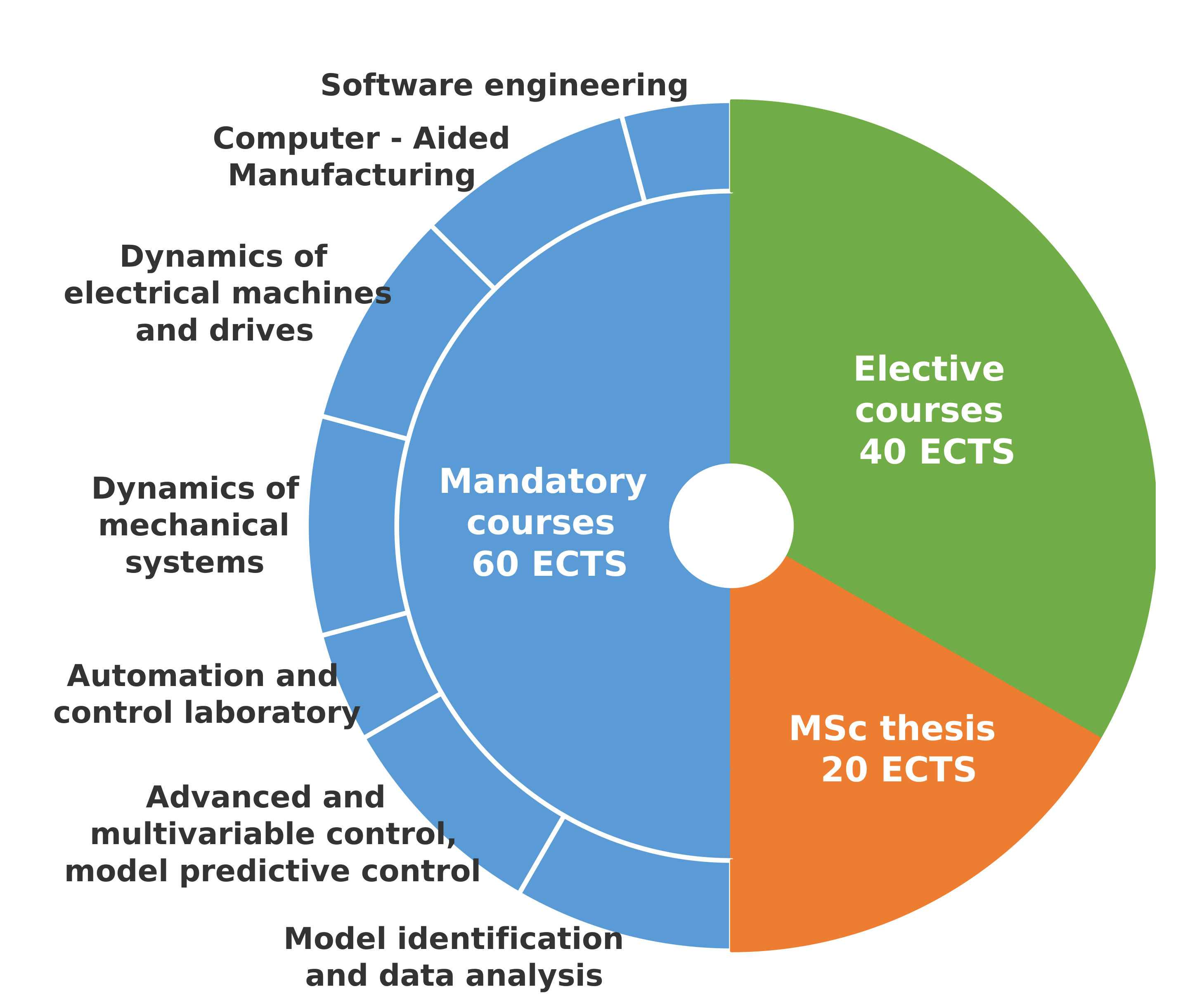
The first year focuses on advanced control techniques essential for understanding and managing complex systems. Courses such as Model Identification and Data Analysis, Advanced and Multivariable Control, and Model Predictive Control provide the tools to model, design, and optimize dynamic processes. Topics like Dynamics of Mechanical Systems and Computer-Aided Manufacturing bridge theory and practice, while elective courses (10 CFU) allow students to tailor their learning path.
Second Year
The second year offers a flexible structure for specialization according to individual interests and career goals. Half of the coursework consists of elective subjects in fields such as robotics, energy, autonomous vehicles, and physical AI. The Automation and Control Laboratory provide hands-on experience, while Software Engineering develops the skills to integrate automation solutions into complex systems. The year concludes with the Master’s thesis, an in-depth research project that consolidates the student’s expertise.
Overview
An overview of the overall study plan across the two years is shown below:
Methodologies for automation and control systems: advanced modelling and control techniques. Technologies for automation and control systems: sensors, embedded systems, and IoT technologies. Robotics: motion planning, perception, and control for industrial and mobile robots. Autonomous vehicles: vehicle dynamics, sensor fusion, and autonomous driving. Energy systems and natural resources:smart grids, sustainable energies and resource management. Industrial processes, plants and manufacturing: modern production systems and Industry 4.0 applications. Project Experiences:apply knowledge to real-world projects. Transversal skills: leadership, ethics, and innovation.
Master’s thesis is an original research or innovation project developed under faculty supervision, often in collaboration with companies or research institutions. It involves applying the knowledge and methods acquired during the program to address advanced automation challenges independently and critically.
Training Profiles
Electives are structured into thematic areas to help guide students in selecting courses that align with their interests and career goals. This organization allows for a clear progression toward developing in-depth expertise in a particular field. At the same time, students have the flexibility to choose courses from multiple thematic areas, enabling them to gain a broader and more well-rounded understanding of different subjects. Check the dedicated page for further information.
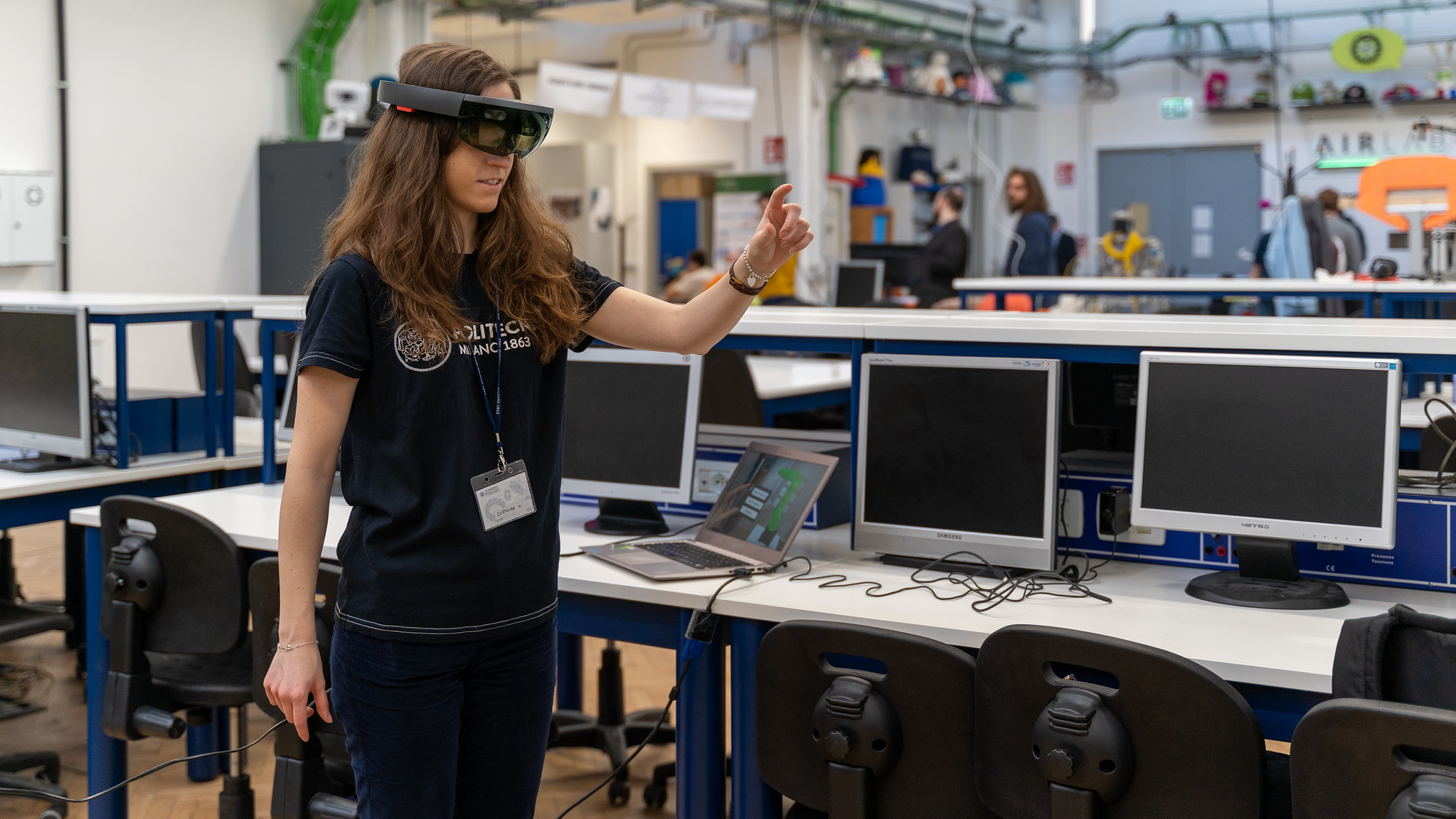
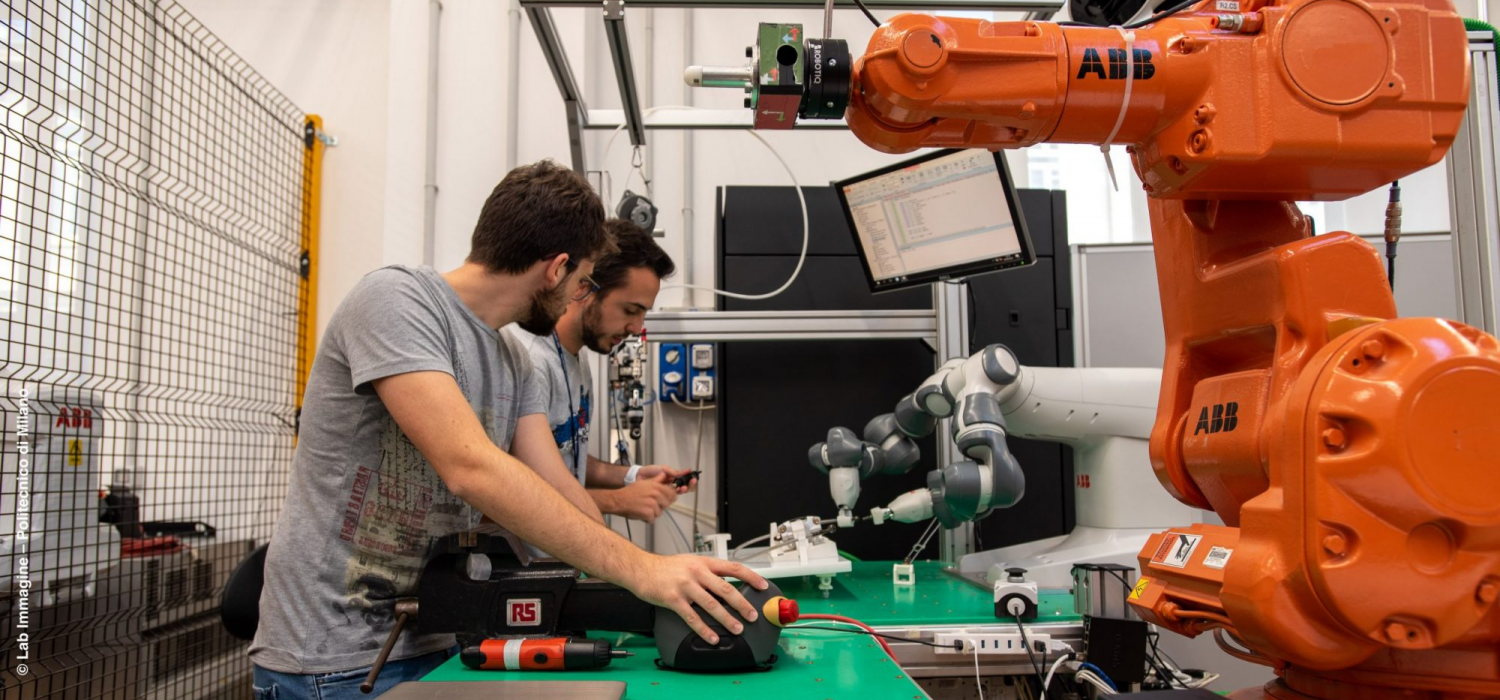
The Study Program provides access to various laboratories, used both for teaching activities within the core courses and for research activities as part of the Master’s thesis and the PhD program.